Across Africa, women bear the brunt of climate change. As primary food producers, water collectors, and family caregivers, they face disproportionate impacts while remaining largely excluded from policy decisions.
But gender-responsive climate finance initiatives and carbon credit programs are beginning to create pathways for women’s leadership in the fight against climate change.
Although developing nations contribute little to global emissions, they play a crucial role in addressing climate change under the principle of common but differentiated responsibilities. By reducing emissions, these countries can receive financial incentives from wealthier nations, strengthening the case for global climate finance.
Carbon trading has provided a means for developing nations to participate in results-based climate programs. Under the Lowering Emissions through Accelerated Forest Finance initiative, several countries have secured lucrative agreements. Ghana signed a 5.2 million credits deal for emission reductions in December 2023. Brazil’s Para Province secured $15 per credit for its 18 million credits, while Indonesia has received 1.7 million credits from the Green Climate Fund since 2020.
Kenya is among the African nations leading efforts to integrate gender into climate policy. “In response to gender inclusivity in policies and the implementation of climate change initiatives, Kenya is developing legislation that promotes women’s participation,” said Jeniffer Githegi, a parliamentary liaison and project advisor for the African Centre for Parliamentary Affairs. Kenya’s constitution mandates gender equity in climate action, reinforcing these efforts.
Since ratifying the Paris Agreement in 2016, Kenya has pursued ambitious climate policies. Its revised Nationally Determined Contribution (NDC) aims for a 32% emissions reduction by 2030, an increase from the previous 30% target. While Kenya’s first NDC depended entirely on external funding, the latest iteration commits the country to mobilizing 13% of the estimated $62 billion implementation budget, requiring the remaining 87% from international sources.
A gender analysis was integrated into Kenya’s NDC review, mapping climate vulnerability hotspots and identifying disparities in resource access, participation, and benefits. “The review assessed how effectively gender issues are integrated into Kenya’s policies and institutions,” Githegi said. It examined key sectors—agriculture, energy, and water—to ensure that climate strategies address gender inequalities.
Climate and Gender in East Africa
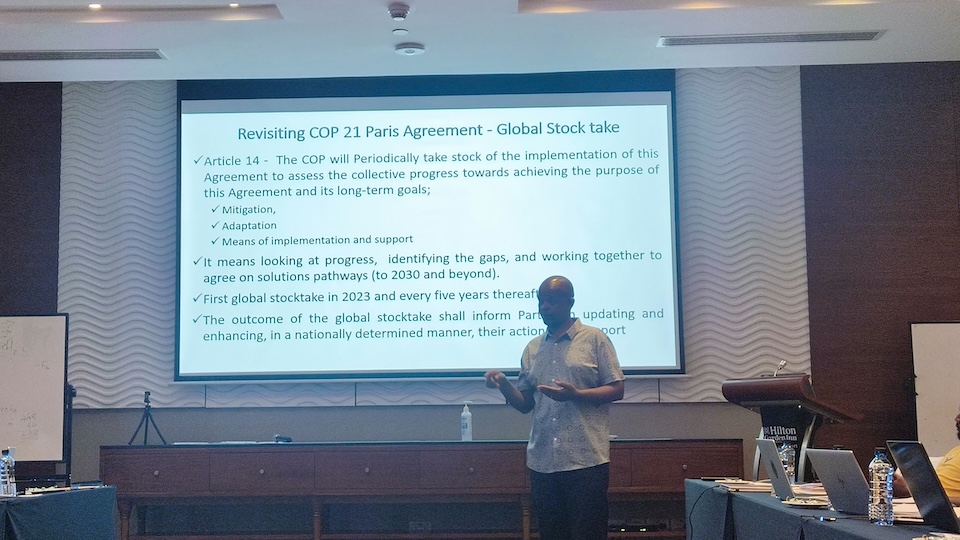
The African Union’s Climate Change and Resilient Development Strategy (2022-2032) aims to enhance regional collaboration and strengthen climate resilience across the continent. However, national responses vary significantly.
Uganda, despite experiencing severe climate impacts, lacks comprehensive legislation. Although environmental protection policies exist, integrating gender considerations into climate strategies remains a challenge.
Tanzania faces climate-related threats across multiple sectors, from agriculture to health and housing. While policies addressing climate change are in place, an overarching legislative framework is still missing.
Rwanda has taken a pioneering approach. The first African country to ban plastic bags, Rwanda’s constitution guarantees environmental rights and mandates citizen participation in conservation. Women, who make up 89% of the agricultural workforce, are encouraged to own land and hold leadership roles in climate decision-making bodies.
The African Centre for Parliamentary Affairs, with support from Global Affairs Canada, is advancing gender-responsive climate policy through its Inclusive Legislatures for Gender-Responsive Policies project. Running from 2022 to 2026 in Ghana, Togo, and Kenya, the initiative analyzes how climate laws impact women, girls, people with disabilities, and marginalized communities—proposing legal reforms that promote inclusivity.
Carbon Trading: Opportunities and Challenges
Carbon credit markets offer both promise and significant hurdles for Africa.
“The Enhanced Transparency Framework requires UNFCCC parties to submit Biennial Transparency Reports,” said Professor Mwangi Kinyanjui, a natural resources conservation researcher. “Developing countries must disclose the climate finance they receive, including internationally transferred mitigation outcomes and their associated emission reductions.”
Carbon credits, Kinyanjui noted, are essential for Global South economies. The Kyoto Protocol mandates that developed countries report efforts to promote and finance technology transfer to poorer nations. Yet African governments struggle with carbon markets due to limited capacity.
“Carbon markets are dominated by developed nations,” Kinyanjui explained. Buyers hail from wealthier countries, while verification bodies and registries—such as Verra, ART-TREES, and Plan Vivo—are based abroad. This leaves African nations at a disadvantage in branding, validating, and marketing their carbon credits.
Kenya exemplifies both the challenges and potential of carbon trading. “Many carbon-credit-worthy projects in the Global South go unrecognized,” Kinyanjui said. Kenya’s forest and land sectors hold significant potential, from trading tree-based products to promoting agroforestry. While the country has a robust institutional framework, it must strengthen mechanisms for results-based payments to attract investors.
However, Winnie Kinoti, a climate justice expert at Crown Trust, pointed to a deeper issue: the lack of reliable data on climate change and carbon credits across Africa. “Governments must recognize climate change as a critical national issue and develop the regulatory frameworks necessary to tackle it,” she said.
The Urgency of Climate Action
With economies like Kenya’s heavily reliant on climate-sensitive sectors—agriculture, water, energy, and tourism—climate change poses a mounting economic threat. It is already estimated to cost the country 2% to 2.8% of its annual GDP.
“The crisis is compounded by multiple challenges, from the locust invasion and the Covid-19 pandemic to the devastating floods of 2023,” Githegi said.
As climate impacts intensify, Africa faces a fundamental challenge: bridging the gaps in gender equality, climate finance, and governance. Strengthening these areas is critical for ensuring food security, health, and education—and for building a future that is both resilient and sustainable.